
Today, personal data is everywhere online often without people even realizing it. Your name, phone number, home address, email, relatives, job details, and even past locations can be easily found on the internet through data broker websites, people-search platforms, and public directories. 🧑💻📄
This data doesn’t usually get exposed because of hacking. Instead, it’s collected, aggregated, and resold by third-party websites that legally pull information from public records, social platforms, and online activity. Over time, these sites build detailed profiles that anyone can access sometimes for free, sometimes for a small fee. 💸🔍

The real problem? Once your personal data is public, you lose control over who uses it and how. This exposure can lead to spam calls, scams, identity theft, stalking, impersonation, and even targeted fraud.
For professionals, executives, and business owners, the risk is even higher because attackers often combine personal data with work-related details to run social engineering attacks. ⚠️📧
That’s why personal data removal has become an important step in protecting online privacy. Removing your information from these sites helps reduce digital exposure and limits how easily bad actors can misuse your details. 🛡️
In this guide, you’ll learn what personal data is, where it appears online, how data removal works, and how services like OneRep help remove and continuously monitor personal information across hundreds of data broker websites so your data stays private long-term. ✅🔄
📌 What Is Personal Data and Why It Gets Exposed Online 🧩🌐
Personal data is any information that can be used to identify you directly or indirectly.
This includes obvious details like your full name, phone number, home address, and email, but it also goes much deeper. Data broker sites often list age, relatives, past addresses, employment history, social profiles, and sometimes even financial or lifestyle signals. 🧑💼📍
So why does this data end up online so easily? The key reason is that most of it comes from legal, public sources not hacking. 🏛️
These sources include:
- Public records (property records, voter rolls, court filings)
- Utility and service sign-ups
- Online purchases and form submissions
- Social media activity and profile details
- Marketing databases and lead lists
Over time, data brokers aggregate all of this scattered information into a single profile. Once compiled, these profiles are published on people-search websites, where anyone can look them up. 🔎💻
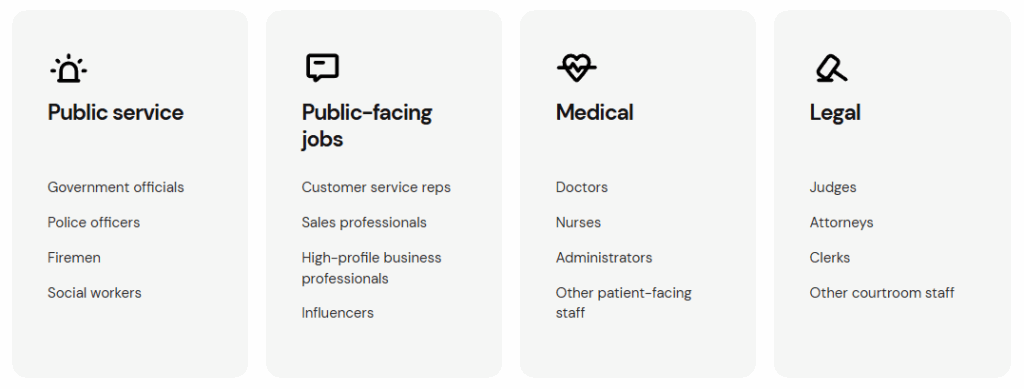
Some sites offer limited access for free, while others charge a small fee making your personal data widely accessible with almost no friction.
Another reason personal data stays exposed is lack of awareness. Most people don’t know:
- Which sites have their data
- How many copies of their data exist
- That data often reappears even after removal
Even if you never intentionally shared your information publicly, secondary sharing happens behind the scenes. One signup, one purchase, or one public record entry can lead to your data spreading across dozens of sites. 🔄📂
This is exactly why personal data exposure is so hard to control manually and why removal requires a systematic, ongoing approach, not a one-time action.
Services like OneRep focus on identifying where this data appears and helping remove it across many sources at once, while also monitoring for future reappearances. 🛡️🔁
📌 Where Your Personal Data Is Found Online 🗂️🔍
Most people are surprised to learn how many places store and display their personal data online. Your information isn’t usually sitting on just one website it’s spread across dozens or even hundreds of platforms, many of which you’ve never heard of. 😯🌐
Here are the main places where personal data is commonly found:
1. Data Broker & People-Search Websites 🧑💻📄
These are the biggest sources of personal data exposure. Data broker sites collect information from public records, marketing databases, and online activity, then create detailed profiles about individuals.
They often display:
- Full name and aliases
- Current and past addresses
- Phone numbers and email addresses
- Relatives and associates
- Age and approximate income range
Anyone can search these sites with just a name or phone number. This is exactly why attackers, scammers, and even stalkers rely on them. ⚠️
2. Public Records & Government Databases 🏛️📑
Some personal data becomes public by law. Property records, voter registrations, business filings, and court documents are all legally accessible records. Data brokers routinely scrape these sources and republish the information in an easier-to-search format.
Even if a record is old, it can still be:
- Indexed by search engines
- Copied by multiple third-party sites
- Linked to your current profile
3. Search Engines (Google, Bing, etc.) 🔎🌍
Search engines don’t create personal data but they make it easy to find. When people-search pages or public directories rank in Google, your information becomes visible with a simple name search.
This means:
- Employers, scammers, or strangers can find your data instantly
- One exposed profile can lead to many others
4. Social Media & Online Profiles 📱👤
Social platforms like LinkedIn, Facebook, and other networks often reveal:
- Job titles and workplaces
- Locations and career history
- Connections and relationships
Even when profiles are private, public metadata (name, role, company) can still be scraped and reused by data brokers. 🤖
5. Company Websites & Online Directories 🏢📘
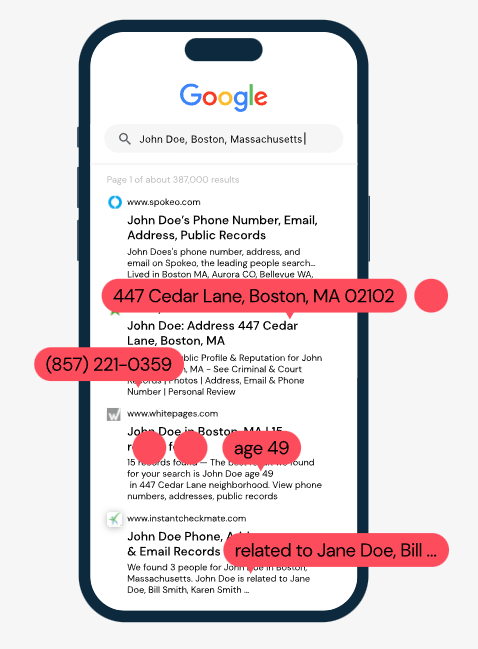
Many businesses publish employee directories or contact pages. While useful for customers, these pages can unintentionally expose direct emails, phone numbers, and job roles, giving attackers everything they need to impersonate someone internally. 🎭
Once your data appears in any of these places, it rarely stays isolated. It gets copied, resold, and republished, creating a long-term exposure problem.
That’s why effective personal data removal focuses not just on one site, but on tracking and removing data across multiple sources continuously which is exactly the approach used by services like OneRep. 🔁🛡️
📌 Risks of Leaving Personal Data Publicly Accessible ⚠️🧠
When personal data stays publicly available online, the risks go far beyond spam calls or unwanted emails. Public exposure creates real-world consequences that affect personal safety, finances, and professional credibility. 🧑💼💸
Here are the most serious risks of leaving personal data exposed:
1. Identity Theft & Financial Fraud 💳🚨
Scammers use publicly available details like full name, address, and date of birth to open fake accounts, apply for loans, or bypass security questions. Even partial data is often enough to impersonate someone convincingly.
2. Phishing & Social Engineering Attacks 🎯📧
When attackers know:
- Your job title
- Where you work
- Who you report to
They can craft highly believable emails or messages. This leads to account takeovers, payment fraud, and internal breaches, especially for professionals and executives.
3. Stalking, Harassment & Doxxing 🕵️♂️📍
Public address and phone number listings make it easier for bad actors to:
- Track someone’s physical location
- Harass them repeatedly
- Expose private details publicly (doxxing)
This risk is especially high for women, public figures, journalists, and executives.
4. Reputation & Career Damage 📉👔
Old addresses, incorrect associations, or misleading profiles can create:
- Awkward situations during background checks
- Loss of trust with employers or clients
- False assumptions about income, lifestyle, or relationships
Once indexed, this data can influence decisions made by recruiters, partners, or investors.
5. Increased Risk of Business & Vendor Fraud 🏢⚠️
For professionals, exposed personal data often becomes the entry point for business fraud. Attackers combine personal info with company data to:
- Impersonate vendors
- Redirect invoices
- Run business email compromise (BEC) scams
This is why personal data exposure is now considered a business security risk, not just a privacy issue.
Because personal data spreads across multiple sites and often reappears after removal, risk doesn’t disappear on its own. Reducing exposure requires continuous monitoring and repeat removals, not a one-time cleanup. 🧹🔁
This is where structured removal and monitoring services like OneRep help by reducing visibility across hundreds of data broker sites over time significantly lowering the chance of misuse. 🛡️
Publicly accessible personal information can be exploited in many ways, including identity theft, phishing scams, and fraud attempts examples of these data privacy risks are detailed by experts at DataGuard.
📌 How Personal Data Removal Works (Step-by-Step) 🛠️🔐
Personal data removal isn’t a single click or one-time request it’s a process. Because your information exists across many sites and keeps resurfacing, effective removal follows a structured, repeatable workflow. Here’s how it works in practice 👇
Step 1: Scanning the Internet for Your Personal Data 🔎🌐
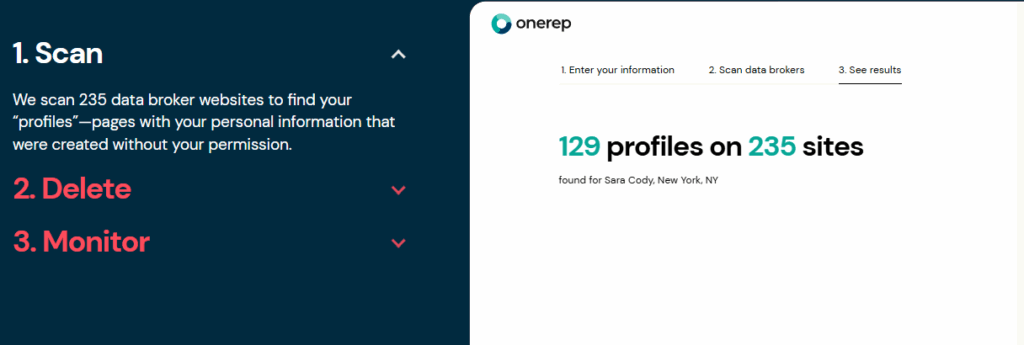
The first step is identifying where your data exists. This includes:
- Data broker websites
- People-search platforms
- Public profile listings
Each site may list your data differently, so scanning must account for name variations, old addresses, and multiple phone numbers.
Step 2: Matching and Verifying Profiles 🧩✅
Not every profile with your name belongs to you. Removal requires:
- Verifying matches using address history and relatives
- Avoiding removal of someone else’s data by mistake
This step is critical because wrong removals can fail or get rejected.
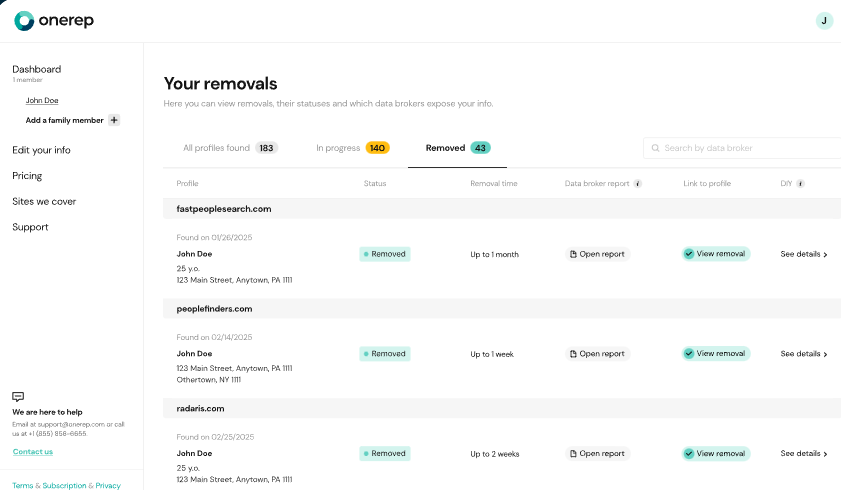
Step 3: Submitting Removal / Opt-Out Requests 📤📝
Once profiles are confirmed, opt-out or deletion requests are sent to each site.
Each site has a different process:
- Some require forms
- Some need email verification
- Some ask for ID confirmation
This is where manual removal becomes time-consuming and error-prone.
Step 4: Follow-Ups and Confirmation Tracking ⏳📬
Many sites don’t remove data instantly. They may:
- Delay processing
- Reject incomplete requests
- Re-publish data later
Effective removal requires tracking every request, following up, and confirming successful takedowns.
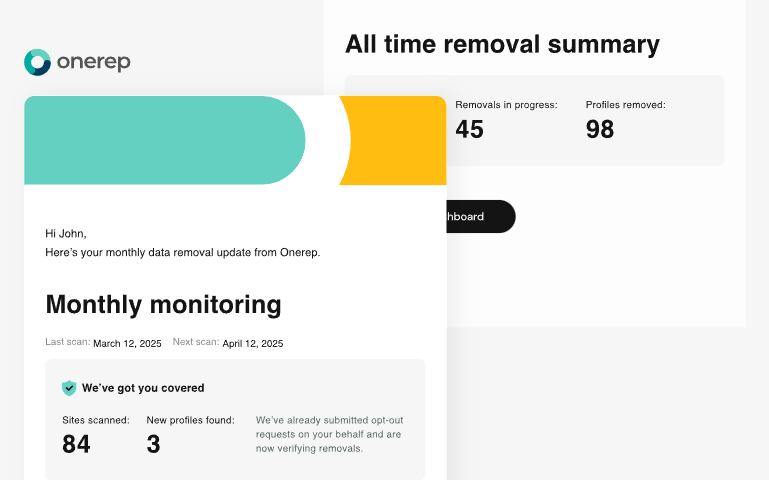
Step 5: Ongoing Monitoring for Re-Appearance 🔁👀
This is the most overlooked step. Even after removal:
- Data brokers re-crawl public sources
- Your info can reappear weeks or months later
That’s why continuous monitoring is essential not just one-time cleanup.
📌 Why Automation Matters Here 🤖
Doing this manually across dozens (or hundreds) of sites is extremely difficult. This is where services like OneRep come in by automating scanning, removals, and long-term monitoring so exposed data stays offline consistently.
🔹Manual Personal Data Removal vs Automated Services ⚖️🧑💻🤖
Once people understand that their data is exposed, the next question is simple:
Should I remove my personal data manually, or use an automated service?
Both options exist but the effort, accuracy, and long-term results are very different. 👇
1️⃣ Manual Personal Data Removal 📝⏳
Manual removal means visiting each data broker or people-search site yourself and submitting opt-out requests one by one.
What this involves:
- Searching dozens of sites individually 🔍
- Finding the correct profile among similar names 🧩
- Filling different opt-out forms for each site 📄
- Verifying requests via email or phone 📧📞
- Repeating the process every few months 🔁
Challenges with manual removal:
- Extremely time-consuming (can take weeks) ⏰
- Easy to miss hidden or lesser-known data broker sites
- High chance of data reappearing after removal
- No centralized tracking of what was removed and when
Manual removal may work for one or two sites, but it quickly becomes unmanageable as data spreads across many platforms.

2️⃣ Automated Personal Data Removal Services 🤖🛡️
Automated services handle the entire process for you scanning, removing, and monitoring personal data continuously.
How automated removal helps:
- Scans hundreds of data broker sites regularly 🔎
- Identifies matching profiles accurately
- Submits and tracks removal requests automatically 📤
- Monitors for data re-appearance over time 🔄
- Saves massive amounts of time and effort
Services like OneRep are designed specifically for this scale. Instead of one-time cleanup, they focus on ongoing protection, which is critical because personal data doesn’t stay removed permanently.
3️⃣ Which Option Is Better? 🤔
- Manual removal → Suitable for short-term, limited cleanup
- Automated services → Best for long-term privacy, professionals, executives, and anyone concerned about scams or identity misuse
If your goal is real privacy and reduced risk, automation wins not because it’s convenient, but because it’s consistent and repeatable. ✅
📌 How OneRep Removes Personal Data from the Internet 🛡️🌐
OneRep is designed to solve the real problem with online privacy: personal data doesn’t stay removed unless it’s continuously monitored and taken down. OneRep focuses on doing this at scale, without requiring users to manually chase dozens of websites. 🤖🔁
Here’s how OneRep’s removal process works in practice 👇
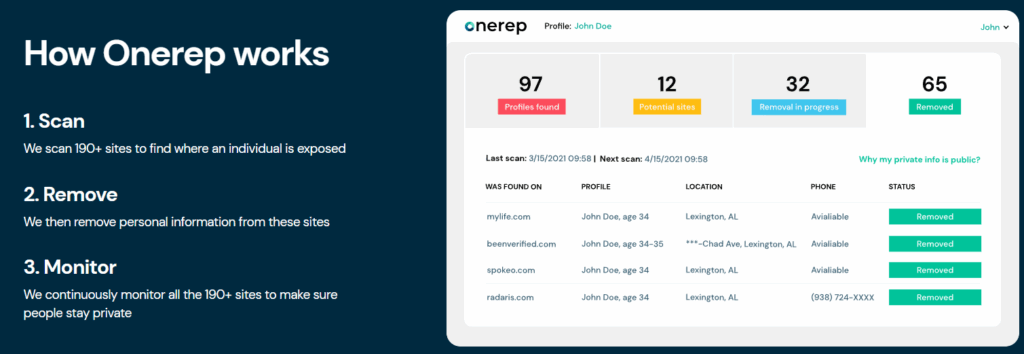
1. Scans 230+ Data Broker & People-Search Sites 🔎📂
OneRep continuously scans a large network of data broker and people-search websites where personal information is commonly published. These include sites that list:
- Names and aliases
- Phone numbers and email addresses
- Home and past addresses
- Relatives and associates
This scanning is repeated regularly because new listings appear over time.
2. Identifies Matching Profiles Accurately 🧩✅
Many people share similar names. OneRep uses profile-matching logic based on address history, age range, and known associations to ensure:
- Your data is correctly identified
- Someone else’s profile is not removed by mistake
Accuracy here is critical wrong matches often cause removals to fail.
3. Submits Removal Requests on Your Behalf 📤📝
Each data broker site has its own removal rules. OneRep handles:
- Opt-out form submissions
- Email or link-based verifications
- Site-specific requirements
This removes the burden of navigating dozens of different processes manually.
4. Uses Privacy-Safe Techniques During Removal 🔐
To prevent new exposure during the opt-out process, OneRep uses techniques such as:
- Temporary contact details
- Controlled verification steps
This ensures your real email or phone number isn’t further distributed while removing existing data.
5. Monitors Continuously for Re-Appearance 🔁👀
This is the most important step. Even after removal:
- Data brokers re-scrape public sources
- Your information can come back weeks or months later
OneRep continues monitoring and re-submits removal requests automatically when data reappears something manual methods can’t realistically keep up with.
📌 How Long Does It Take to Remove Personal Data ⏳🕒
One of the most common questions people ask is “How long will it take to remove my personal data from the internet?” The honest answer is: it depends on where your data appears and how often it gets republished. 📊🔁
Initial Removal Timeline 🚀
For most people, the first round of removals begins fairly quickly once scanning and matching are completed.
Typically:
- Some data broker sites remove listings within a few days
- Others may take 2–4 weeks to process opt-out requests
- A few slower platforms can take 30+ days
This variation happens because each site has its own review and verification process.
Why Personal Data Reappears 🔄
Even after successful removal, personal data often comes back. This happens because:
- Data brokers regularly re-crawl public records
- New data sources get added to their databases
- Old records are refreshed automatically
This is why one-time removal creates a false sense of security. ❌

Ongoing Monitoring Is the Real Timeline 🛡️
With continuous monitoring, removal becomes an ongoing process, not a finish line.
Services like OneRep:
- Track removed listings over time
- Detect reappearances automatically
- Re-submit opt-out requests as needed
This means:
Long-term privacy → months and ongoing
Initial cleanup → weeks
What Affects Removal Speed ⚙️
Several factors influence how fast data can be removed:
Frequency of data refresh cycles
Number of sites listing your data
Accuracy of matching profiles
Verification requirements by each site
📌 Conclusion – Take Control of Your Personal Data Online 🔐🌍
Personal data exposure isn’t something that happens overnight and it doesn’t disappear on its own either.
Your information spreads quietly across data broker sites, public records, and search results, creating long-term privacy and security risks. ⚠️
The key takeaway is simple: personal data removal is a process, not a one-time task. Removing information manually may help temporarily, but without ongoing monitoring, data often reappears.

That’s why a structured approach scanning, removing, and continuously monitoring exposure is essential for staying protected. 🔁🛡️
By understanding where your data lives and taking steps to reduce its visibility, you significantly lower the risk of scams, identity misuse, harassment, and targeted fraud.
Services like OneRep exist to make this process manageable and consistent, helping individuals regain control over their digital footprint and maintain privacy long-term. ✅
Protecting your personal data today means fewer risks tomorrow and more peace of mind in an increasingly connected world. 🌐✨
“RELATED ARTICLES”
- Protecting Supplier Contact Data Across the Supply Chain
- Preventing Supply Chain Fraud Through Data Protection
📌 FAQs
1. Can I remove my personal data from the internet completely?
Answer: You can’t remove it 100% permanently, but you can significantly reduce visibility by removing it from major data broker and people-search sites.
2. Is personal data removal legal?
Answer: Yes. Data removal uses legal opt-out and deletion requests allowed by most data broker websites.
3. How often does personal data reappear online?
Answer: Data can reappear within weeks or months, which is why ongoing monitoring is important.
4. Do I need technical knowledge to remove personal data?
Answer: No technical skills are required, but manual removal is time-consuming and repetitive.
5. Who benefits most from personal data removal?
Answer: Professionals, executives, business owners, remote workers, and anyone concerned about privacy, scams, or identity misuse benefit the most.

Hi, I’m Nelson 👋 a content writer and reviewer with 6+ years of experience writing blogs, coupon guides, and detailed website reviews. I have a strong background in continuous learning and research, which helps me analyze platforms, tools, and websites in a structured and practical way 📚.
My content is based on real research, hands-on analysis, and accuracy, with a clear focus on simplicity, transparency, and user-first value. I aim to break down complex information into content that’s easy to understand and genuinely helpful for readers ✅.