
Most people don’t realize their personal information is being collected, combined, and shared long before they ever hear the term data broker. Names, addresses, phone numbers, relatives, and past locations often exist inside large databases accessible to organizations you’ve never interacted with.
In most cases, this data isn’t hacked or stolen. It’s gathered legally from public records, commercial sources, and everyday online activity, then aggregated into detailed profiles. Data brokers sit at the center of this system, quietly buying, organizing, and reselling personal information.
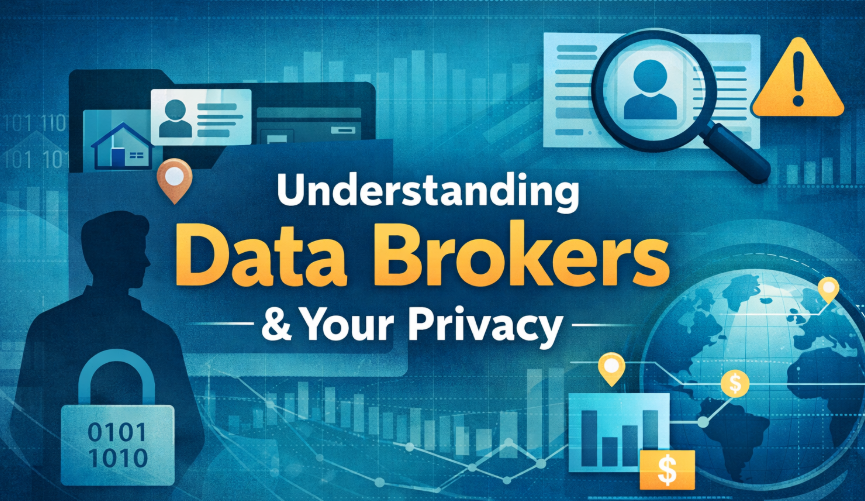
This creates a simple but important question: what does data privacy really mean when personal data is constantly moving?
This guide explains data brokers and data privacy in clear, practical terms how data is collected, why it’s shared, what risks it creates, and what realistic control looks like today. Awareness is the starting point for protecting your digital privacy 🛡️.
📌 What Are Data Brokers? 🗂️
Data brokers are companies that collect, organize, and sell personal information about individuals. Unlike social media platforms or online services, data brokers usually have no direct relationship with you you don’t sign up for them, and you often don’t even know they exist.
These companies build detailed profiles by pulling data from many sources and combining it into structured databases. Their customers can include marketers, advertisers, insurers, financial institutions, employers, and other businesses looking for consumer insights 📊
What makes data brokers different is their scale. They don’t collect data about a few people they collect data about millions, sometimes billions, of individuals worldwide.
🔹Who Buys From Data Brokers?
Brokers serve a vast ecosystem of buyers, each exploiting profiles differently:
- Marketers/Advertisers: Target ads using purchase histories, demographics, and browsing patterns. 🛒
- Employers/Recruiters: Background checks via employment records, social activity, and credit hints.
- Insurers/Financial Firms: Risk-score individuals from health searches, driving records, and income estimates. 💳
- Fraud/Cybersecurity: Authenticate via device fingerprints, IP logs, and usage anomalies.
- Health/Pharma: Research from fitness data and supplement purchases.
- Retail/Real Estate: Spot homebuyers through property searches and spending.
- Governments/Law Enforcement: Surveillance using geolocation, social media, and voter data. 👮
- Political Campaigns: Micro-target voters with affiliation insights. 🗳️
This diversity explains their profitability data fuels decisions from loan approvals to personalized billboards.
🔹How They Differ from Big Tech
While Google/Facebook collect first-party data, brokers excel at third-party aggregation across ecosystems. They buy from retailers, scrape public sources, and cross-reference breaches, creating richer dossiers than any single platform holds. No app needed; they thrive on backend deals. 😱
📌 How Data Brokers Collect Personal Information 🧾🔍
Data brokers don’t rely on a single source to build profiles. Instead, they collect small pieces of information from many places over time, then combine them into detailed records. For beginners, this explains why personal data appears online even when it was never shared intentionally.
1. Public Records as a Foundation 🏛️
A large portion of broker data comes from legally public sources, such as:
- Property ownership and tax records
- Voter registration files
- Court documents and legal filings
- Professional and business licenses
These records are meant for transparency, but they are frequently reused for commercial purposes.
2. Commercial and Transactional Data 🛒
Everyday interactions generate data that may be licensed or sold:
- Utility and telecom signups
- Insurance and subscription services
- Warranty registrations and loyalty programs
- Retail and e-commerce transactions
Over time, these records help brokers link identities to addresses, contact details, and behavioral patterns.
3. Online Forms and Lead Databases 📝
Many websites collect personal information through:
- Newsletter signups
- Surveys and contests
- Free tools or downloads
This data often enters marketing databases and can be resold or shared downstream.
4. Digital and Metadata Signals 🌐
Even without posting publicly, online activity creates metadata:
- Location signals
- Device and IP associations
- App and website interaction patterns
These signals help brokers enrich existing profiles rather than create new ones.
5. Data Aggregation Over Time ⏳
The key point is accumulation:
- Older records are rarely deleted
- New data is continuously added
- Profiles become more complete with each update
No single interaction exposes everything it’s the long-term aggregation that builds detailed personal profiles.
6. Why This Matters for Privacy 🔐
Because data collection is distributed and ongoing, it’s difficult to “trace back” exposure to one action.
Understanding these collection paths helps beginners see why privacy protection focuses on managing visibility, not stopping data collection entirely.
Many security researchers describe how brokers “stitch together” fragments of information from different sources to form detailed profiles about individuals, creating what some call “Frankenstein data” that is then packaged and sold to partners and resellers.
📌 What Kind of Data Data Brokers Hold 🧾
Data brokers don’t just store basic contact details. Over time, they build multi-layered profiles that combine identity data with behavioral and contextual information. This is what makes their databases so valuable and so concerning from a privacy perspective.
Here are the main types of data data brokers typically hold 👇
Personal identification data
This includes full name, age or date of birth, gender, and sometimes marital or household status.
Contact and location data 📍
Current and past addresses, phone numbers, email addresses, and approximate location history may be included.
Financial and commercial data 💳
Spending patterns, estimated income ranges, property ownership, and purchase behavior are often inferred from transactions or loyalty programs.
Online and behavioral data 🌐
Browsing interests, app usage patterns, device types, and engagement categories help classify people into marketing segments.
Relationship and household data 👨👩👧
Information about family members, household size, and living arrangements is commonly used to refine profiles.
Individually, these details may seem harmless. But when combined, they create a detailed and searchable digital identity.
The important thing to understand is this 👇
👉 Data brokers don’t just record facts they make assumptions.
Inferences and predictions are often added to profiles, even if they’re not always accurate.
This level of aggregation is why data brokers raise serious data privacy questions not because of one piece of data, but because of the complete picture they create.
Once personal data enters broker databases, removing it requires a structured process. Here’s how to remove personal data from the internet safely and reduce long-term exposure.
📌 Why Data Brokers Are a Privacy Concern
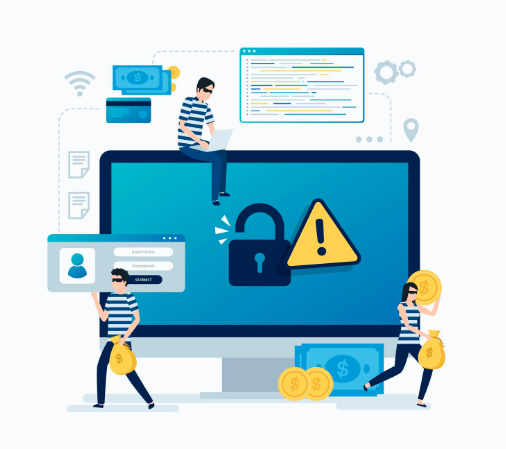
Data brokers represent a profound privacy threat by transforming your personal details into a tradable commodity, enabling widespread surveillance, discrimination, and exploitation without accountability or consent.
They don’t just hold data they analyze it to predict behaviors, score risks, and fuel decisions that impact loans, insurance rates, job offers, and ads, often unfairly profiling people based on inferences rather than facts.
This shadowy ecosystem erodes anonymity, turning everyday lives into predictable targets for scammers, marketers, and authorities. 😱
🔹Key Privacy Risks
Brokers amplify dangers through scale and opacity:
- Discrimination & Bias: Insurers raise premiums on “unhealthy” fitness inferences; employers reject via “risky” social scores—AI guesses bake in errors. ⚖️
- Identity Theft & Scams: Breach data + profiles = perfect phishing kits; criminals buy dossiers cheaply on dark markets.
- Surveillance Creep: Governments access location/political data sans warrants, chilling free speech.
- Manipulation: Hyper-targeted ads/political messages exploit weaknesses, as seen in election meddling.
- No Recourse: Weak enforcement lets them dodge consent rules, especially on public data.
Real Stakes: A single profile can deny you a mortgage or job based on a decade-old purchase pattern.
🔹Why They’re Hard to Stop
Loopholes galore public records need no permission, “anonymous” data re-identifies easily, and aging laws (pre-AI era) fail against real-time tracking. The $434B industry lobbies hard, while “consent fatigue” from endless pop-ups hides sharing in fine print. Global patchwork worsens it: Strict zones like EU contrast laxer spots. 🚨
🔹Everyday Impacts
- Financial Harm: Brokers sell spending data, triggering predatory loans.
- Health Privacy: Supplement buys flag “chronic illness,” hiking costs.
- Family Exposure: Kids’ app data slips in, risking predators.
Victims report “psychic” stalking ads or denied services your data funds it unknowingly.
Beginner Wake-Up: Brokers don’t “serve” you; you’re the inventory. Awareness sparks resistance 🔒.
📌 How Data Brokers Share and Resell Data 🔄📤
Once data brokers collect and organize personal information, the next step in the ecosystem is distribution. This is where privacy risks multiply because data rarely stays in one place.
1️⃣ Data Is Sold, Licensed, or Exchanged 📦
Data brokers typically share information through:
- Direct sales to businesses or institutions
- Licensing agreements with partners
- Data exchanges with other brokers
In many cases, the same dataset is reused multiple times across different buyers.
2️⃣ One Source, Many Destinations 🌐
A single profile may be:
- Sold to a marketing company
- Licensed to a people-search website
- Combined into another broker’s database
This is why removing data from one site does not stop it from appearing elsewhere.
3️⃣ Data Moves in Refresh Cycles ⏳
Sharing is not a one-time event. Brokers:
- Refresh datasets regularly
- Update profiles with new records
- Reintroduce older data during updates
As a result, information can resurface even after it was previously removed.
4️⃣ Buyers Don’t Always Collect Data Themselves 🧠
Many companies that use personal data:
- Don’t collect it directly from individuals
- Rely on broker-supplied datasets
- May not know where the data originally came from
This separation makes accountability harder to trace.
5️⃣ Why Resale Makes Privacy Control Harder 🔐
Every resale:
- Increases the number of databases holding your data
- Creates more copies that must be managed
- Expands the surface area for misuse
Once data is shared widely, controlling visibility becomes an ongoing effort rather than a single action.
🔹 The Key Takeaway 📌
Data brokers don’t just collect information they enable its continuous circulation. Understanding this flow explains why privacy protection focuses on monitoring and maintenance, not just initial removal.
📌 Can You Opt Out of Data Broker Databases?
Yes, opting out of data broker databases is feasible but demands persistence, as there’s no universal “erase” button—manual requests work for free, while paid services streamline the grind across dozens of brokers.
Success varies by region: stricter laws like GDPR mandate deletions, but in lighter zones, brokers must honor opt-outs only if notified, with data often recirculating from public sources. Expect 60-80% reduction in visibility with effort, though full removal eludes most due to resale chains. 🔧
🔹 Opt-Out Methods Breakdown
Approaches range from DIY to automated, each with trade-offs:
- Manual Requests: Visit broker sites (e.g., Acxiom, Experian opt-out pages), submit forms with ID verification—free but hits 100+ firms, taking hours weekly.
- Paid Removal Services: DeleteMe, PrivacyBee scan 50-200+ brokers repeatedly for $100-300/year, handling resubmissions.
- Legal Leverage: Invoke CCPA (CA), GDPR (EU), or emerging laws like CA’s 2026 DROP platform for mandatory 45-day deletes.
- Search Engine Fixes: Request Google delist doxxed info via “right to be forgotten” tools.
Process Tip: Document requests with dates; recheck quarterly via name searches.
🔹 Prevention Over Cure
Starve brokers upfront:
- Adjust browser/social privacy to block tracking.
- Use aliases/temp emails for signups.
- Ditch data-hungry free apps for privacy-first alternatives 📴.
Caveat: Public records (voter lists) repopulate profiles—request exemptions where possible.
🚨 Real Talk: Opt-outs pause sales but not copies; combine with audits for control.
Start with top brokers today—small wins build momentum 🔒.
📌 Common Myths About Data Brokers and Privacy ❌
Data brokers are often misunderstood, which leads to assumptions that can weaken personal privacy. Clearing up these myths helps set realistic expectations and encourages smarter decisions.
Myth 1: “Data brokers only collect data about shoppers or online users.”
Reality: Data brokers collect information from many sources, including public records and offline activities. Even minimal online activity doesn’t prevent data collection.
Myth 2: “If my data is public, it’s harmless.”
Reality: Public data becomes risky when it’s aggregated, categorized, and made easily accessible at scale.
Myth 3: “Opting out once solves the problem.”
Reality: Data can be re-collected and re-listed over time, making privacy an ongoing effort.
Myth 4: “Only big companies use data broker information.”
Reality: Data is used by many types of organizations, including marketers, recruiters, insurers, and analytics firms.
Myth 5: “Data brokers know only basic information.”
Reality: Brokers often build detailed profiles that include inferred behavior and predicted interests.
The biggest misunderstanding is this 👇
👉 Privacy loss doesn’t require a mistake.
It often happens simply by participating in modern digital life.
Recognizing these myths allows people to move from false security to informed awareness which is the foundation of real data privacy.
📌 What Data Privacy Control Looks Like in Reality 🧭
When people think about data privacy control, they often imagine full ownership knowing exactly who has their data and being able to delete it instantly. In reality, data privacy control is more practical and limited, especially in a world driven by data brokers.
Real control doesn’t mean complete invisibility. It means reducing exposure, increasing transparency, and making informed choices about how your information flows.
In practice, data privacy control looks like:
- Understanding where personal data is commonly collected
- Limiting unnecessary data sharing during sign-ups and online activity
- Being aware that opt-outs reduce visibility, not total collection
- Accepting that privacy requires ongoing attention, not a one-time action
Another important shift beginners need to make is moving from reactive behavior to proactive awareness. Instead of waiting for problems like spam, scams, or data misuse, control comes from recognizing risks early and adjusting habits accordingly.
It’s also important to acknowledge the limits. Laws, company policies, and technology all play a role in how much control individuals truly have. That’s why privacy today is best understood as risk management, not absolute ownership ⚖️
The realistic goal is this 👇
👉 Make your data harder to collect, harder to combine, and less useful if it is shared.
When you understand what control really looks like, privacy becomes manageable rather than overwhelming.
📌 Conclusion: Understanding Data Brokers Is the First Step 🔐🌱
Data brokers operate quietly, but their impact on personal privacy is significant. They collect information from many legal sources, combine it over time, and circulate it across a wide network of buyers and platforms.
This is why personal data can feel persistent, duplicated, and difficult to control.
The key takeaway is simple: privacy starts with understanding the system. Once you know how data brokers collect, share, and refresh information, it becomes clear why one-time fixes don’t work and why realistic control focuses on visibility reduction, opt-outs, and ongoing awareness.
You don’t need to eliminate every trace of data to improve privacy. By setting the right expectations and taking informed, consistent steps, you can meaningfully reduce exposure and regain a sense of control over your digital footprint 🛡️.
“Related Articles”
- Manual vs Automated Personal Data Removal Process Explained
- A Beginner’s Guide to People-Search Sites & Online Privacy
FAQs ❓🔍
1. Are data brokers the same as people-search sites?
Not always. People-search sites are often consumer-facing, while data brokers may operate in the background supplying data to many platforms.
2. Is it legal for data brokers to collect my information?
In many regions, yes. They typically rely on public records and licensed commercial data.
3. Can I completely remove my data from all data brokers?
Complete and permanent removal is unrealistic. You can reduce public visibility and manage reappearance.
4. Why does my data come back after opt-out?
Because brokers refresh databases and ingest new data sources over time.

Hi, I’m Nelson 👋 a content writer and reviewer with 6+ years of experience writing blogs, coupon guides, and detailed website reviews. I have a strong background in continuous learning and research, which helps me analyze platforms, tools, and websites in a structured and practical way 📚.
My content is based on real research, hands-on analysis, and accuracy, with a clear focus on simplicity, transparency, and user-first value. I aim to break down complex information into content that’s easy to understand and genuinely helpful for readers ✅.